

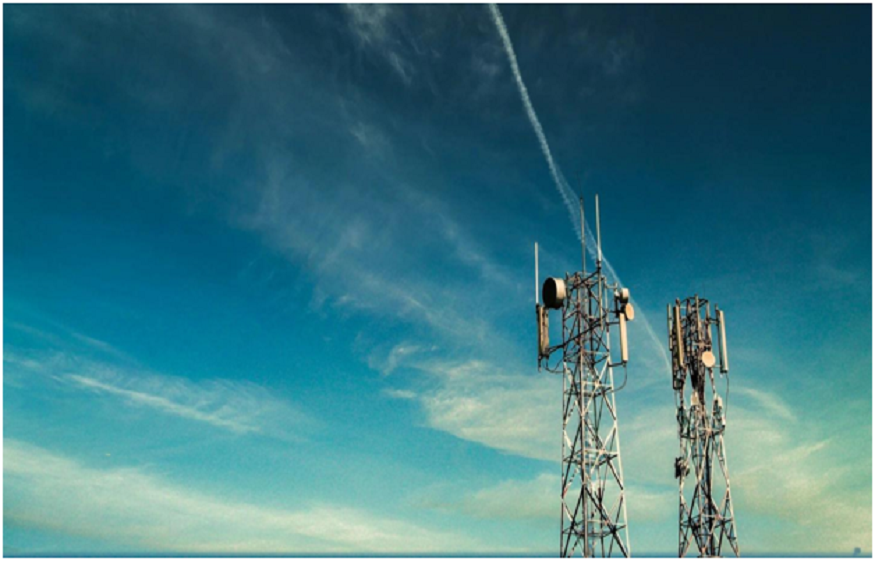
Large office buildings in Texas and across the U.S. look more advanced than ever. They’re brighter, more energy-efficient, and packed with smart infrastructure. Yet many of them still have spots where mobile service drops, calls sound choppy, or data feels slow. The strange part is that these weak areas often show up in the most important places, like meeting rooms, elevator lobbies, interior hallways, and parking levels.
This issue is not always about your phone, your carrier, or even the neighborhood tower. In most cases, it comes down to what happens when outdoor cellular signals try to enter a dense commercial structure, then travel across long floor plates filled with walls, glass, steel, and equipment. Once you understand what creates these gaps, it becomes easier to see why they persist and what a realistic fix actually looks like.
What dead zones really are and why they keep appearing
A dead zone doesn’t always mean you have zero bars. More often, it’s a place where your phone shows coverage, but the connection can’t stay stable. Calls may cut out, messages might take too long to send, and apps can feel sluggish. From a tenant perspective, it’s the inconsistency that’s most frustrating, because people can’t predict where service will fail.
These weak pockets keep appearing because multiple causes overlap. Building materials reduce signal penetration, the interior layout disrupts what gets through, and daily usage increases demand at the exact time people expect reliability. In a large office environment, those factors don’t cancel out. They stack together, and that stacking effect is what makes signal gaps so common even in newer buildings.
Why high occupancy makes weak coverage feel even worse
Signal strength is only one part of the story. Capacity matters just as much, especially in large office buildings where hundreds or thousands of devices are active at the same time. A floor can feel “fine” early in the morning and then feel broken after lunch, simply because occupancy rises and network load increases.
This is especially noticeable in shared spaces. Lobbies, conference centers, collaborative floors, and multi-tenant amenity areas often experience traffic spikes at predictable times. When demand rises in zones that already struggle with penetration, performance drops quickly. That is why tenants often describe the issue as “random,” even though it usually follows the building’s busiest patterns.
Why Wi-Fi doesn’t always solve a cellular problem
Fearing “bad signal,” many people immediately blame Wi-Fi. However, Wi-Fi and cellular are two different networks with different activities. Some buildings have fine Wi-Fi but poor mobile connection for calls and carrier data, particularly when they have visitors, shared tenants, or employees on different floors.
Wi-Fi calling offers a way out, but not always. Everything depends on the device’s settings, the user’s action, the stability of the Wi-Fi, and the congestion behavior of handoffs. If the building has visitors who anticipate full service in each room, working with indoor performance of cellular signals is more reliable than hoping that Wi-Fi can be found everywhere.
What a distributed antenna approach actually changes inside a building
A distributed antenna design brings the signal source closer to the people using it. Instead of relying on outdoor towers to push through layers of material, the building uses internal pathways and antennas to deliver more consistent coverage across the areas that matter. The goal is to reduce sharp drops, smooth out weak pockets, and support a predictable performance floor to floor.
This is where a cellular DAS system becomes a practical solution. Rather than boosting one corner and leaving the rest untouched, it helps create intentional indoor coverage across large footprints. When designed correctly, it supports steadier service in conference rooms, core hallways, and high-traffic zones, so tenants spend less time searching for a “good spot” just to complete normal work.
How life-safety communications fit into the conversation
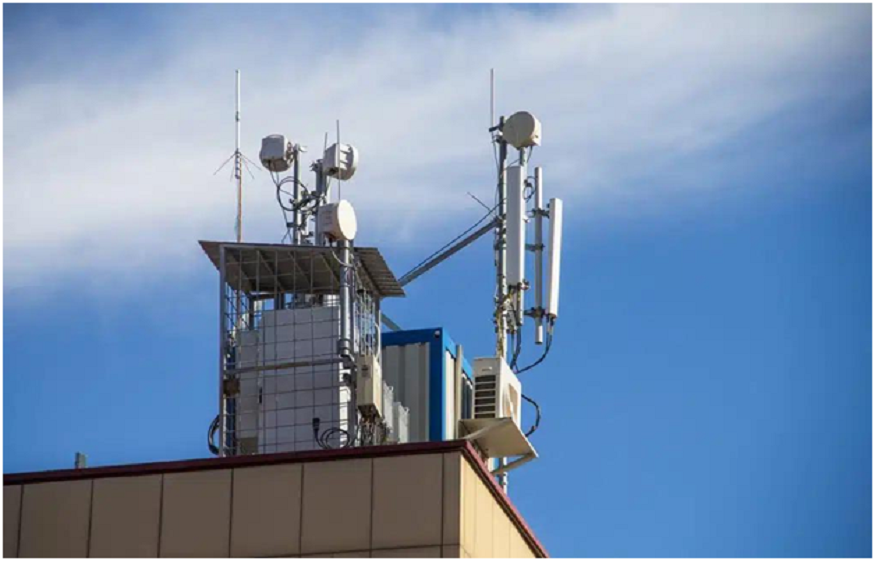
Large office buildings also have a responsibility that goes beyond tenant convenience. Many jurisdictions evaluate emergency responder radio performance separately from commercial cellular performance. That means a building can have strong mobile service for everyday users and still struggle to support responder radios in stairwells, core spaces, and below-grade areas, depending on local requirements.
This is where planning can become more structured. A public safety DAS system is designed to support emergency communications where it is required and verified, while commercial indoor cellular planning focuses on tenant and visitor experience. They are related in concept, but they serve different users and are measured against different standards, so it is important not to treat them as interchangeable.
What good planning looks like from an owner and tenant perspective
From the owner’s standpoint, the aim is to install technology as ends, not means. The ends here are complaints reduction, tenant productivity support, and leasing value because they are the highest. From a strategic perspective, the practical plan should start with how people use structure: where they meet, where they co-create, where they move, and where coverage failure causes the highest breakage.
Good planning also considers change. Tenant build-outs, remodels, and space reconfigurations can shift how signals behave indoors. That is why documentation, logical equipment placement, and a maintenance-ready approach matter. The best outcomes are not just “better coverage today,” but stable performance that still holds up as the building evolves.
When a distributed approach makes the biggest difference
A distributed approach tends to matter most when the building is large, dense, or architecturally complex. Deep floor plates, heavy concrete cores, multi-level parking, and high device density create the perfect conditions for persistent weak coverage. In those environments, relying on outdoor towers alone is rarely enough, even in strong coverage neighborhoods.
A cellular DAS system helps because it delivers coverage intentionally across the property rather than depending on whatever signal happens to leak in from outside. For tenants, the value is simple: fewer dropped calls, smoother meetings, and fewer moments where people need to walk around just to find stable service.
How to reduce future surprises after the system is in place
Even after improvements are made, buildings can change. A new tenant layout, extra walls, different furniture density, or new equipment zones can shift indoor behavior. That is why long-term success often includes periodic verification, especially in areas that historically underperform, such as interior corridors, conference clusters, and below-grade levels.
For buildings that also have emergency communication requirements, long-term discipline matters even more. A public safety DAS system may need continued attention to ensure performance remains consistent as the property changes. When owners treat indoor coverage as a living system instead of a one-time project, the building stays more reliable, and tenant confidence stays higher.
Conclusion
Signal gaps persist in large office buildings because modern materials reduce penetration, interiors disrupt what enters, and daily device demand pushes networks harder than most people realize. Fixing the issue usually requires more than a quick hardware add-on. The most dependable results come from measurement, engineering, and a design approach that matches how people actually use the building every day.
CMC Communications supports commercial property teams with engineering, testing, and in-building wireless solutions tailored for large office environments. Their team helps owners reduce guesswork through real measurement, plan coverage that aligns with tenant expectations, and deliver implementations that hold up under real occupancy, so the building performs consistently instead of cycling through repeated complaints.
FAQs
Q 1. Why do mobile issues show up in conference rooms more than open areas?
Ans 1. Conference rooms are often deeper in the core of the property, surrounded by denser walls and doors that weaken signals. They also get crowded during meetings, which increases device demand and makes weak coverage feel worse. If a property has reliable service near windows but not in enclosed rooms, it’s usually a sign that indoor penetration is limited and the interior layout is amplifying the drop.
Q 2. Is the problem always caused by a weak carrier network outside?
Ans 2. Not always. Outdoor coverage can be strong, but structural materials can prevent that signal from reaching the interior reliably. Two properties on the same street can perform very differently because of glass coatings, steel density, core layout, and floor depth. That is why testing inside the site is more useful than assuming the carrier is the only cause.
Q 3. Can Wi-Fi calling replace an indoor cellular improvement project completely?
Ans 3. Wi-Fi calling can help, although it depends on whether Wi-Fi is stable enough on the site, the user-controlled device settings, user activity, and other factors. Sometimes visitors do not know about Wi-Fi calling or find it confusing, and even when they use it, call quality can vary with movement and crowd density. If the objective is to establish a solid mobile experience for tenants and visitors, indoor cellular design is typically the answer.
Q 4. What is the safest first step before choosing a solution?
Ans 4. Start with measurement. A structured assessment shows where coverage drops, how severe it is, and which areas matter most for tenants. That data prevents overspending on equipment that only improves one corner while leaving the real pain points untouched. In large office properties, that “measure first” step is often what separates a lasting fix from a temporary improvement.
Q 5. Why do parking levels and elevator lobbies feel like problem zones?
Ans 5. These areas are typically surrounded by concrete and steel and sit far from the perimeter, which reduces penetration. They also create challenging radio paths because signals reflect and fade through structural barriers. That is why they frequently show up during indoor testing as places where mobile performance becomes inconsistent, especially when the property is busy.